Tuesday, January 5, 2016

Prompts


1. What was the best song of 2015?

I liked Take Me To Church by Hozier. I liked it because it was one of the few songs I remembered this year and it had a good beat and feel to it that I liked. It wasn't too energetic, or boring. It had the right balance.

2.What was the best movie of 2015?

My favorite movie would be The Force Awakens because I love Star Wars and the whole idea of it. I love how they brought you back into it and how they introduced the characters. Also, it was the movie that everyone was talking about and waiting for.

3. What was the most important news story of the year?
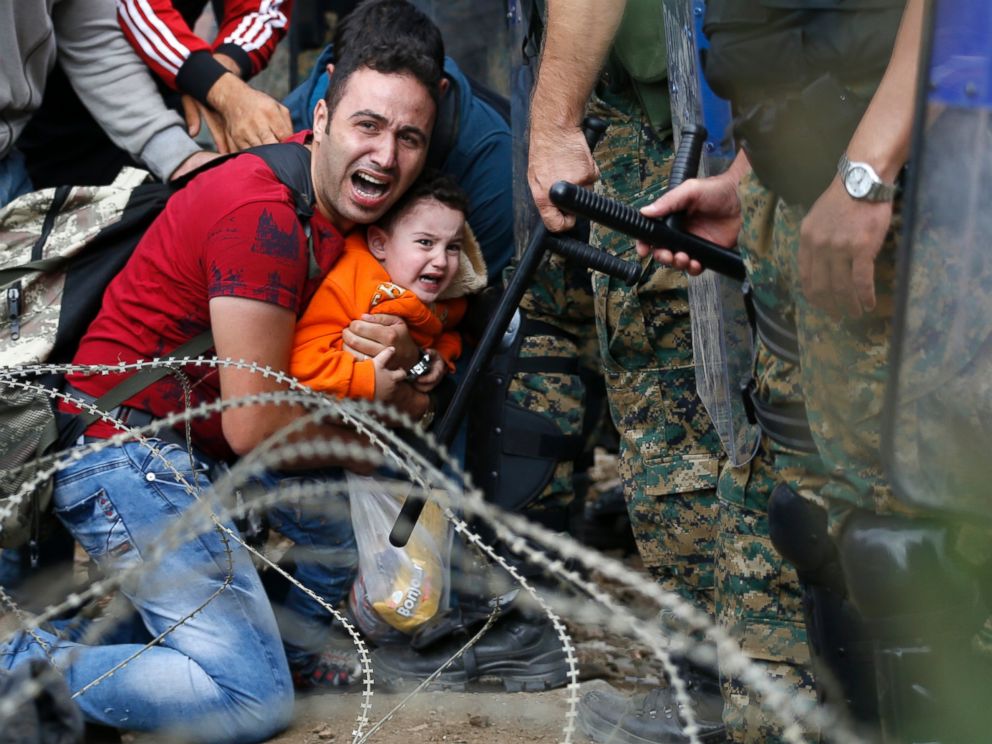
The most important news story is that countries are closing their borders to refugees and the U.S. is facing the same choice. These people are running way from death, danger, and war, but the countries block them from leaving the area. In my opinion, this is an important issue and one that shouldn't be an issue.

4. Who was the important person of 2015?
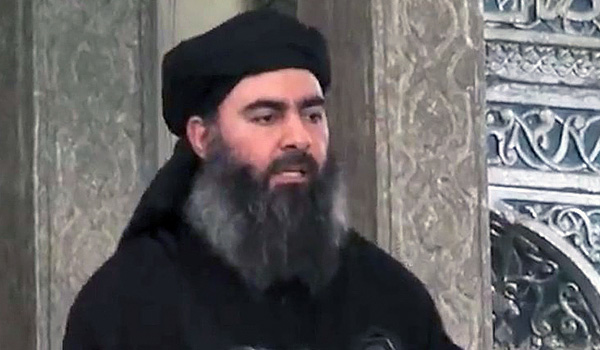
Sadly, I think Abu Bakr Al-Baghdadi is the most important person of 2015 for all of his bad deeds. He is the leader of ISIS, so he is the one responsible for a lot of trouble in the Middle East, an area that had a lot of trouble already. He is important because countries over the world are searching for him to stop him and his organization.

5. What was the biggest sports or entertainment story or sports/entertainment person of 2015?

I think that Jimmy Fallon was the biggest entertainment person as a comedian, because of all of the fans and popularity he had gained. I like him, and he has been getting a lot of attention. With the Tonight show, I definitely think he is the biggest, most well-known comedian, which is why I picked him.

3 Favorite Photos of 2015


This was one of my favorites because you don't see this often, how the northern lights were shown with long exposure. This is the first time I had heard of it or seen it, and I thought the blend of colors looked interesting.

I chose this one because it was up close and gave a lot of detail. I had seen many pictures of  canyons, but they were all pretty big and the photo showed the whole canyon from the top. This one is from the bottom and up close.

I liked this one mostly because of how the photographer displayed all of the colors and surrounding environment. It was a very pretty and colorful scene, and did actually give a storybook feel.


Friday, December 18, 2015

Extra Credit- Doomed man on Subway


The man was on the subway tracks because the man he was trying to calm down pushed him down in the subway tracks. The photographer was able to take the image by trying to warn the train operator by using his flash, in the meanwhile capturing the man on the tracks. The photographer said he was trying to warn and make the train operator stop the train by using his flash. I think the photographer didn't actually take the photo on purpose, he was trying to help the man by warning the train operator. It really depends for me how he tried to help the man first. The article said he tried to help the man, but it doesn't say how. If he tried to lift the man up but couldn't, then thats okay, but then why was he so far away from the tracks? I think that if the photographer had called for help and tried to help the man up, that was the best he could do. But I don't know exactly what he did. Using the flash was pretty smart, though, if his idea was to actually warn the operator. I think the role of human and citizen comes before journalist, and you should always try to stop bad things if you can, but if you can't, it is too high above you, then you should take photos and record the event under your choice. Yes, for example if a photographer takes a picture of his family and then runs to get in the picture, that is great, fine. You can involve yourself in a situation that you photograph, for example photographing people running after you, or something else. But this image, you should have just tried to continue to try to help the person up. I think that certain images should not be taken, or at least shared, for example this image. Before you take an image or share it, think who it could affect. You don't show a family how a person died, it makes it too real and painful. especially when everyone in New York might have seen it. Photographers should influence some events as they happen, such as this one. You should try to stop an event that is happening, even if it would be a good story or photo. Be a human and citizen before your job, do what is right and generous. The most appropriate response is that you should have tried to help the man up first, and only took the flash pictures as a last resort when stronger and faster people are helping the man and there is no space for you to help him. Also, isn't there like an emergency switch in subway stops, where lights start flashing? You should have flipped that, if there was one. I like the last and 2nd to last comments personally, where they say at least you would have tried and be ashamed. You shouldn't have shown the photos, at least. Just remember: being a photographer doesn't make you less of a person. BE A PERSON BEFORE A PHOTOGRAPHER.

Friday, December 11, 2015

Killer Timelapse


Website: http://blog.ted.com/how-to-create-a-killer-timelapse-with-joe-capra/

On this website, I found a video of a time-lapse of Rio de Janeiro with Iguazu Falls. I also found an interview with the maker about how he made it, how he got into the business, how does he do these time lapses, and why Rio? I learned how some people do a time-lapse and how they prepare for it and  choose the location.

In the time-lapse video, I saw multiple time lapses of different and the same things, but with different angles. I saw the waves cross onto the beach and retreat many times, with the boats moving with them, and I saw the clouds rolling by,  the people and traffic going along their business. I also saw the steam from the falls, and the water flowing from the falls. I also saw a lot of houses, and all of the miniature movement going on. Joe Capra of Scientifantastic was the maker of the video. He is a photographer as well as a timelapser. This video was shown at session 1 of TEDGlobal 2014. The words underneath the video talk about the clothes flapping, the waves lap on the beach with a rhythm, and the steam dancing off the waterfall. I learned that that is how water looks like in a time-lapse, and how much boats move in a day, and that there is a waterfall near Rio.

Ethics of Manipulated photos review


I believe that small mistakes in shooting the photo could be manipulated, that is alright. But completely changing something in the photo when it is no longer true or real, that is too far. Removing makeup, or things that were prepared for before the photo being shot is okay, or removing something like a hand or another small merger is alright. But removing people or adding people should definitely not happen at all. Those people were in the photo, so deal with it. Take another photo, and be careful this time. If it can be avoided, never manipulate images. Especially if you are delivering news, if you manipulate images, that news you are delivering with that image is fake. You should take photos to show what happened, not what you wanted to happen.

The 3 pillars of Photography Review


Aperture- Aperture controls how much light goes into the camera. Aperture is measured in f-stops, where the smaller the f-stop, the more light goes into the picture and the bigger the hole. A larger f-stop will also make the foreground clear and the background blurred out.

Shutter speed- Shutter speed is how fast the shutter takes the picture and allows light to come into the camera. Shutter speed is measured in seconds, and the larger the time, the more blurred moving objects are. With a short shutter speed, the camera takes a picture that looks as if time had stopped, and moving objects are still and clear. The darker the area you are shooting in, the longer you want the shutter speed to be.

ISO- With a higher ISO, you can freeze motion easier without a higher shutter speed. But with more ISO, the "noise " in the background increases. What that means is that your pictures become more gritty and pixelated. You can also increase the ISO for more light to come in, but you generally want to keep your ISO as low as possible.

The Rules of Photography Review


1. Rule of thirds- Imagine if you cut line down the face of your camera's screen to make a tic-tac-toe game, putting your subject in any of the places where the lines intersect would be using the rule of thirds.
2. Balancing Elements- Balancing the photo by putting something on each side of the photo makes sure there isn't blank space that makes the picture pretty empty.
3. Leading Lines- Including lines leading to your subject, especially S lines, can make your photo more interesting.
4. Symmetry and Patterns (repetition)- Including any geometric shape or pattern whether man-made or natural will make the photo more eye catching.
5. Viewpoint- The photo could be made more interesting by changing the normal viewpoint of something. For example, instead going face to face, you could look at them from high up, or down low.
6. Background- Making the background simpler and less cluttered can make a photo much more neat and better than one with a distracting background.
7. Create depth- You can do this by including objects in the foreground, mid ground, and background. Mountains are a good example, with each farther mountain being a different color.
8. Framing- Use trees or other objects to literally frame your picture. Let them be around the sides of your picture.
9. Cropping- By cropping around the subject you make the viewer more focused on it and less on the distractions around it.
10. Mergers and avoiding them- Avoid objects in the picture that seem to be interacting, such as a man with a tree on top of his head. Also avoid cutting a person off, keeping only one random hand on the left side of your picture, for example.